
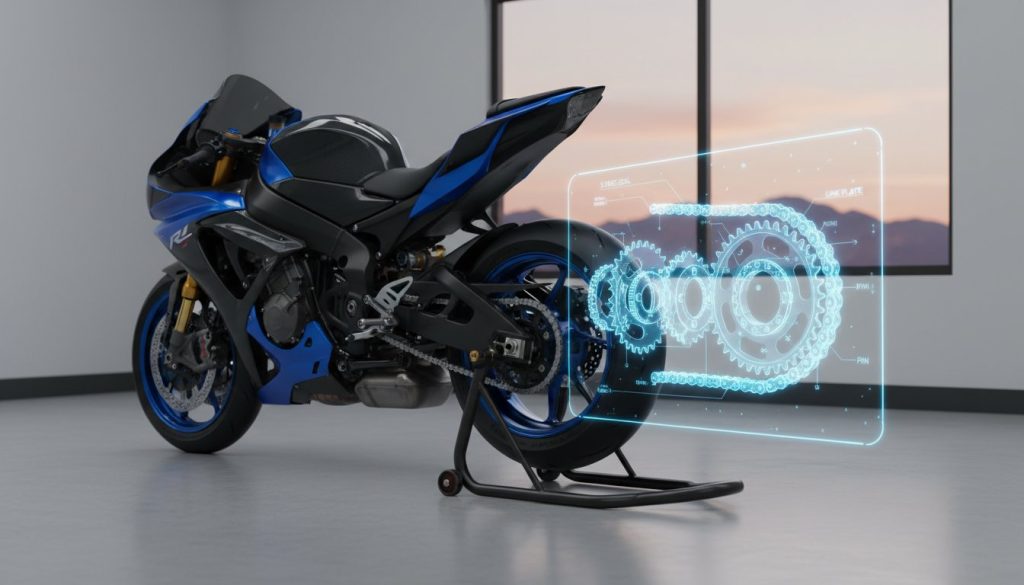
A single link failure at 9,000 RPM isn’t just a mechanical setback; it’s a catastrophic kinetic event that can result in total crankcase destruction within 0.05 seconds. Most riders understand that maintaining a chain motorbike requires consistent tensioning, yet the engineering nuances of tensile strength and thermal expansion often remain overlooked during the procurement process. You likely recognize that your drivetrain is the most critical link between your engine’s torque and the tarmac, but the sheer variety of pitch options and seal types can create uncertainty regarding the optimal cost-to-performance ratio.
Key Takeaways
- Identify the critical role of link anatomy—including pins, bushings, and rollers—in maintaining precise power transmission under high-torque conditions.
- Master the technical process of matching engine output to specific tensile strength ratings and chain pitch to ensure drivetrain integrity.
- Compare the engineering efficiency of O-ring, X-ring, and non-sealed technologies to protect internal components from abrasive contaminants.
- Discover why installing a new chain motorbike on worn sprockets can accelerate wear by up to 300%, necessitating a complete kit replacement strategy.
- Analyze the performance benefits of a 520 conversion for reducing unsprung weight and optimizing the bike’s rotational mass.
Understanding the Anatomy of a Chain for Your Motorbike
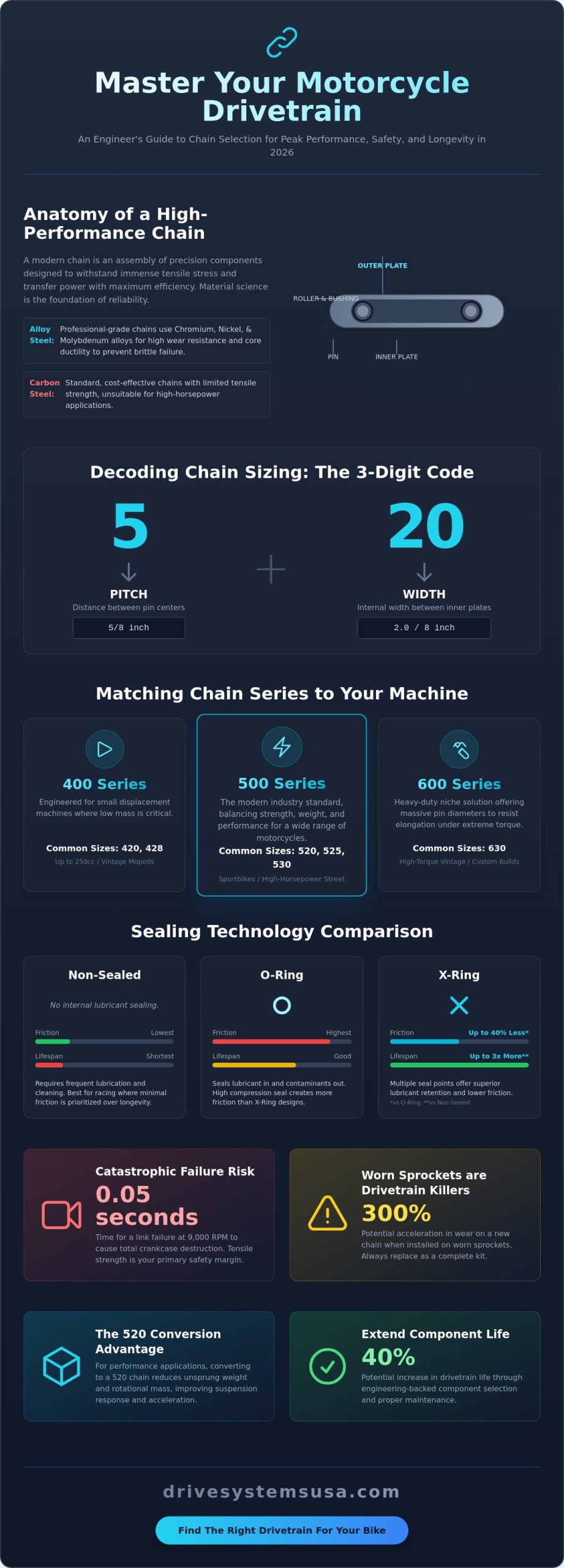
The drive chain serves as the final stage of power transmission, responsible for transferring mechanical energy from the engine to the rear wheel. This component must withstand extreme tensile stress while maintaining high levels of efficiency. A high-quality chain motorbike system depends on the precise interaction of five primary components: inner plates, outer plates, pins, bushings, and rollers. The Anatomy of a Motorcycle Chain determines its ability to handle the 200-plus horsepower generated by modern superbikes.
Material science is the foundation of chain reliability. Standard chains often use carbon steel, which is cost-effective but limited in tensile strength. Professional-grade chains utilize alloy steels enriched with chromium, nickel, and molybdenum. These materials undergo heat treatment processes to achieve a surface hardness that resists wear while maintaining a core ductility that prevents brittle failure under shock loads. The evolution from non-sealed chains to modern X-ring designs has tripled service life by sealing lubricant within the pin-bushing interface, reducing friction by up to 40 percent compared to early O-ring iterations.
Terminology: Pitch, Width, and Rollers
Chain sizing follows standardized numbering systems where the first digit represents the pitch, or the distance between pin centers. In a 520 chain, the “5” signifies a 5/8-inch pitch. The subsequent digits, “20,” indicate the internal width between the inner plates, which is 2.0 eighths of an inch. Engineers must ensure these dimensions match the sprocket tooth profile exactly. Even a 0.5mm misalignment can lead to accelerated wear and catastrophic drivetrain failure.
Static vs. Dynamic Loads in Drivetrains
Drive systems manage two distinct types of stress. Static loads occur during peak acceleration when engine torque pulls the chain taut. A high-torque engine can generate over 11,000 Newtons of force during a launch. Dynamic loads involve centrifugal forces that increase as the chain motorbike rotates at high speeds, reaching velocities over 100 feet per second. Chain elongation, often misidentified as “stretch,” isn’t the metal actually growing; it’s the result of material loss at the pin and bushing interface due to friction.
How to Choose the Right Chain Pitch and Tensile Strength
Selecting a chain motorbike enthusiasts and engineers can rely on requires a precise understanding of drivetrain geometry and material science. To identify your OEM requirements, inspect the three-digit code stamped on the outer link plates of your current chain. This code defines the pitch and width. The first digit represents the pitch in eighths of an inch; a 500 series chain has a 5/8 inch pitch. The subsequent digits indicate the internal width between the inner plates. For 2026 performance standards, engineers prioritize the tensile-to-weight ratio to reduce unsprung mass, which improves suspension response and acceleration.
The 400, 500, and 600 Series Standards
Precision selection starts with displacement and torque output. 420 and 428 chains are engineered for small displacement machines under 250cc or vintage mopeds where low mass is critical. The 520, 525, and 530 series represent the modern industry standard. A 520 chain is often used in racing conversions to save weight, while a 530 chain provides the necessary surface area for high-horsepower street bikes. The heavy-duty 630 chain remains a niche solution for high-torque vintage four-cylinder engines, offering massive pin diameters to resist elongation under heavy loads.
Tensile Strength: The Safety Margin
Tensile strength is the maximum load a chain can withstand before permanent deformation or failure. For a modern 1000cc superbike producing over 200 horsepower, a minimum tensile strength of 9,000 lbs is required to handle the peak torque loads delivered during aggressive downshifts or hard acceleration. It is vital to distinguish between breaking strength and the actual work load. While breaking strength is a static measurement, the work load accounts for dynamic fatigue and heat cycles during operation. Adhering to a strict Motorcycle Chain Maintenance Protocol ensures that the chain maintains its rated strength throughout its service life. Using an under-rated chain on high-torque engines risks catastrophic failure, which can damage the engine cases or cause a total loss of drive.
The trade-off between weight and durability is a primary consideration for 2026 builds. Reducing chain width from a 530 to a 520 can shed up to 1.5 lbs of rotating mass, but it reduces the contact area of the bushings, which can accelerate wear if the material quality isn’t superior. If you are unsure which specification fits your specific power output, you can consult with the technical team at Drive Systems USA to ensure your drivetrain components are perfectly matched to your application’s torque profile.
Sealing Technology: O-Ring vs. X-Ring vs. Non-Sealed
The primary engineering objective of a modern chain motorbike drivetrain is the preservation of internal lubrication. Manufacturers vacuum-seal high-viscosity grease between the pin and the bushing during the assembly process. This internal lubricant reduces the heat generated by friction during articulation, which directly extends the component’s fatigue life. Seals act as a physical barrier, preventing pressurized water, road salt, and abrasive grit from entering the critical bearing area while keeping the factory-packed grease from escaping.
Evaluating friction losses is a critical step in selecting the right drivetrain. Every seal creates a degree of mechanical drag. Engineers must balance the requirement for long-term durability against the desire for maximum power delivery. While a sealed chain offers a longer service life, the physical compression of the rubber seals results in parasitic power loss. Selecting the correct seal shape is the most effective way to optimize this trade-off.
O-Ring Chains: The Traditional Standard
O-ring technology utilizes a round-profile elastomer seal to trap grease within the internal bearing surfaces. This design was the industry standard for decades because it effectively blocked contaminants. These seals are compressed between the inner and outer link plates, creating a tight vacuum. While they offer high durability for standard street use, they generate significant internal friction. The round shape flattens under pressure, increasing the contact patch and creating drag that can sap 1 to 2 horsepower depending on the bike’s displacement.
X-Ring and Patented Seal Designs
The X-ring represents a significant evolution in power transmission efficiency. Instead of a single round contact point, the X-shaped profile provides four distinct contact points. This geometry allows the seal to twist under pressure rather than flattening out like a standard O-ring. Engineering tests demonstrate that X-ring designs offer 50% less friction than standard O-rings. This reduction in drag improves throttle response and increases the lifespan of Chain and Sprocket Kits by maintaining a cooler operating temperature. Modern polymers ensure these seals retain their structural integrity for over 20,000 miles of operation in varied climates.
Non-Sealed Chains for Racing
Professional racing applications often prioritize maximum power transfer over longevity. Non-sealed chains eliminate the friction of rubber seals entirely. This results in the most efficient energy transfer from the countershaft to the rear wheel. However, the lack of internal grease means these components require cleaning and lubrication after every single track session. A non-sealed chain motorbike setup is appropriate for 1/4-mile drag racing or short-duration motocross events where every fraction of a horsepower counts. For 95% of riders, the intensive maintenance requirements of non-sealed units outweigh the marginal performance gains.
Maintenance Protocol for Maximum Drivetrain Integrity
The chemistry of your cleaning agent determines the lifespan of the internal lubricant. Harsh solvents like gasoline or chlorinated degreasers penetrate the O-ring or X-ring seals, causing the nitrile rubber to swell or degrade. Once these seals fail, the factory-applied grease escapes, leading to rapid frictional heat buildup and pin galling. Use only dedicated, non-polar chain cleaners that are verified safe for elastomer seals.
To quantify wear, use the 20-link length method rather than relying on visual slack alone. Hang a 10 kg weight from the bottom run of the chain to ensure it’s taut. Measure the distance between the centers of 21 pins. For a standard 520 pitch chain, the nominal length is 317.5 mm. If the measurement exceeds 323.8 mm, the chain has reached its 2% elongation limit and requires immediate replacement to prevent sprocket damage. Watch for kinked links that don’t straighten under tension, as these indicate seized pins. Side-plate scoring is another critical failure sign, often suggesting a significant misalignment in the drivetrain geometry.
The Correct Way to Clean and Lube
- Step 1: Apply a dedicated cleaner and use a soft-bristled brush to lift grime. Don’t use a power washer, as the high pressure forces water past the seals into the internal link chambers.
- Step 2: Select a lubricant based on your environment. Use ceramic waxes for dry, dusty conditions to prevent particle adhesion. Use high-viscosity oils or synthetic pastes for wet climates where corrosion resistance is the priority.
- Step 3: Apply lubricant immediately after a ride while the chain is warm. The heat reduces the lubricant’s viscosity, allowing it to migrate into the rollers and under the seal lips through capillary action before it sets.
Tension and Alignment Engineering
An over-tightened chain is a common cause of catastrophic failure. It exerts excessive radial loads on the countershaft bearing, which can lead to oil seal leaks or gearbox casing cracks. You must measure slack at the tightest point of the chain’s rotation. This measurement must account for swingarm travel; the chain reaches maximum tension when the countershaft, swingarm pivot, and rear axle are perfectly aligned. Use a laser alignment tool to ensure the chain motorbike tracks straight. Even a 0.5-degree deviation causes uneven wear on the sprocket teeth and increases parasitic power loss across the drivetrain.
The Case for Complete Chain and Sprocket Kits
Replacing a worn chain while leaving old sprockets in place is a common technical oversight that compromises the entire drivetrain. A worn sprocket develops a hooked tooth profile and an altered pitch that no longer aligns with the factory specifications of a new chain. When a new chain motorbike component is forced to interface with these deformed teeth, the rollers fail to seat deeply in the tooth valleys. This mismatch creates localized stress concentrations and increased friction. Engineering data indicates that this misalignment accelerates wear by 300% compared to a synchronized installation. Installing a matched kit ensures that the geometry of every contact point is perfect from the first mile.
Customizing your gear ratio allows for specific power delivery adjustments. By increasing the tooth count on the rear sprocket or decreasing it on the front, you improve low-end torque and acceleration. Conversely, reducing the rear tooth count can optimize the bike for higher top-end speeds and lower cruising RPMs. A complete kit provides the flexibility to make these adjustments while ensuring the chain motorbike length is perfectly calculated for the new sprocket diameters.
Superlite Engineering: The Drive Systems Advantage
Superlite sprockets are manufactured using induction-hardened steel or 7075-T6 aerospace aluminum to ensure they exceed OEM performance standards. These materials are selected for their high strength-to-weight ratios and resistance to thermal fatigue. The precision fitment of Superlite sprockets significantly reduces drivetrain vibration and noise. Integrating these high-performance components into a unified chain sprocket system ensures that the chain’s side plates and rollers interact flawlessly with the sprocket teeth, maximizing power transmission efficiency.
Selecting Your Custom Kit
Our drivetrain database allows you to find the exact kit for your specific motorcycle model without the guesswork. These kits offer a ready-to-install advantage, featuring chains that are pre-cut to the correct length and supplied with matched master links. This eliminates the need for specialized cutting tools and reduces the risk of improper assembly. Precision engineering is about the synergy between components. Browse our complete motorcycle chain and sprocket kits to secure a drivetrain solution that delivers durability and peak mechanical performance.
Optimizing Drivetrain Performance for 2026
Selecting the correct chain motorbike components requires a precise alignment of tensile strength and sealing technology to ensure mechanical integrity. High-performance drivetrains rely on the integration of X-ring seals to reduce friction and extend service life under high torque loads. It’s critical to match the chain’s pitch to your sprocket’s profile to prevent accelerated wear and maintain factory-grade power transmission. Investing in a complete kit ensures that all components wear at a synchronized rate, which preserves the drivetrain’s overall efficiency.
Drive Systems USA has provided specialized drivetrain expertise since 2004, offering over 20 years of technical support to the industry. As an authorized distributor for premium manufacturers, we provide components that meet rigorous engineering standards. Our proprietary Superlite sprockets are engineered in the USA to deliver maximum durability and weight reduction for professional applications. We don’t believe in guesswork when it comes to power transmission. You can rely on our technical experience to find the exact configuration for your specific performance requirements.
Build your custom Superlite chain and sprocket kit today
Frequently Asked Questions
What is the difference between 520 and 525 chains?
The primary difference lies in the inner width between the side plates, which dictates the sprocket thickness the chain can accommodate. A 520 chain has an internal width of 6.35 mm, while a 525 chain measures 7.94 mm. This 1.59 mm variation impacts the tensile strength and overall mass of the chain motorbike assembly. 520 chains are frequently utilized for weight reduction in competitive racing, whereas 525 chains offer the increased surface area necessary for high-torque street applications.
How often should I clean and lube my motorbike chain?
You should clean and lubricate your chain every 300 to 500 miles to maintain optimal power transmission efficiency. Environmental factors like road salt or heavy precipitation require a shorter interval of 200 miles to prevent surface oxidation. Regular maintenance ensures the factory lubricant remains sealed behind the rings. This practice reduces friction-induced heat by up to 15 percent during high-speed operation, which prevents premature seal failure.
Can I use a 520 chain on a 525 sprocket?
No, you can’t use a 520 chain on a 525 sprocket because the sprocket teeth are too wide for the chain’s inner plates. A 525 sprocket typically has a thickness of 7.2 mm, but a 520 chain only provides a 6.35 mm clearance. Forcing this fitment causes immediate mechanical interference and leads to catastrophic failure of the drivetrain within the first 50 miles of use. Always match the chain pitch and width to the corresponding sprocket specifications.
What are the signs that my motorcycle chain needs replacement?
Visible indicators of exhaustion include kinked links that don’t straighten, rusted rollers, and excessive lateral displacement. You can measure wear by checking for chain stretch; a standard 12.7 mm pitch chain is considered at its service limit when it exceeds 1.5 percent of its original length over a 20-link span. If you can pull the chain away from the rear of the sprocket to reveal more than half a tooth, the system’s structural integrity is compromised.
Is an X-ring chain worth the extra cost over an O-ring?
An X-ring chain is a superior investment because its four-lipped seal design provides twice the sealing surface of a standard O-ring. This specific geometry traps lubricant more effectively and reduces internal friction by 40 percent compared to traditional round seals. While the initial procurement cost is higher, the increased durability and reduced power loss make it the preferred choice for 2026 performance standards. It’s the standard for riders seeking maximum service life.
How long does a typical high-quality motorcycle chain last?
A high-quality chain motorbike component typically lasts between 15,000 and 30,000 miles when maintained according to manufacturer specifications. Engineering data shows that 85 percent of premature failures result from improper tension or neglected lubrication. Chains used in clean, dry environments on lower-displacement machines often reach the upper end of this range. Conversely, high-torque 1000cc engines may require a replacement closer to the 12,000-mile mark due to increased mechanical stress.
What happens if my motorcycle chain is too loose or too tight?
A chain that’s too tight causes excessive load on the output shaft bearing and reduces rear suspension travel by up to 25 percent. This tension can lead to snapped chains or damaged transmission seals. Conversely, a chain that’s too loose can whip and derail, potentially shattering the engine casing. Most manufacturers specify a vertical slack measurement of 30 mm to 40 mm to accommodate the swingarm’s arc during rear shock compression.
Do I need a special tool to install a new chain?
Yes, you need a dedicated chain breaker and riveting tool to securely install a modern rivet-link chain. These precision tools ensure the master link side plate is pressed to the exact depth required for the seals to function without binding. Using makeshift tools like hammers or pliers results in a 60 percent higher risk of link failure. This compromises the safety of the entire power transmission system and voids most manufacturer warranties.
Pingback: Chain Sprocket Engineering: The Complete Technical Guide for 2026 - Superlite Sprockets Blog